What is lens replacement treatment?
Lens replacement treatment, also known as clear lens extraction (CLE) or refractive lens exchange (RLE), is a type of vision correction surgery. It replaces the natural lens inside your eye with an artificial lens called an intraocular lens (IOL).
Unlike laser eye surgery, lens replacement does not reshape the cornea. Instead, the natural lens is removed and replaced with a new lens chosen to match your eyes and vision needs.
Lens replacement can reduce your need for glasses or contact lenses. It can be used to correct several types of prescription, including short-sightedness, long-sightedness, astigmatism and presbyopia. It may also be an option for people who have early changes to their natural lens.
If you are considering treatment, it is important to understand how lens replacement works, who it may suit, the different lens types, the benefits and risks, and what recovery is like.
Who can have lens replacement treatment?
Lens replacement is often considered for people over 40 who want to reduce their need for glasses or contact lenses. It can be particularly useful for people who may not be suitable for laser eye surgery.
For example, some people have a high level of short-sightedness or long-sightedness that may make laser treatment less suitable. Others may have age-related changes to the natural lens that make lens replacement a better option.
However, age alone does not decide whether you can have treatment. Your eye health, prescription, lifestyle and vision goals all need to be considered.
How is suitability assessed?
A detailed eye assessment is needed before lens replacement treatment. Your surgeon will check your prescription and the health of your eyes. They will also look at the shape and measurements of your eyes to help choose the right treatment and lens.
Your lifestyle is also important. You may have different needs if you spend a lot of time driving, reading, using a computer or taking part in sports.
At My Eye Clinic in Gosforth, Newcastle, the aim is to assess your individual needs before recommending a treatment. Lens replacement is not suitable for everyone, so a full assessment is an important part of the process.
How does lens replacement treatment work?
Lens replacement treatment is similar to cataract surgery. The main difference is that, with RLE, the natural lens may still be clear and is being replaced to correct your prescription rather than because it has become cloudy.
During treatment, the natural lens is removed and replaced with an artificial intraocular lens. The power of the new lens is carefully calculated to help correct your prescription.
The procedure does not use a laser to reshape the surface of the eye. Instead, the new lens changes how light focuses inside your eye.
You can learn more about how the procedure compares with cataract surgery in our guide to what is lens replacement surgery?.
What types of lenses can be used?
There are different types of intraocular lenses available. The right choice depends on your eyes, prescription and lifestyle.
A monofocal lens is designed to give clear vision at one main distance. You may still need glasses for other distances.
Multifocal lenses are designed to provide vision at more than one distance. They may help reduce your need for glasses for activities such as reading and looking into the distance.
Extended depth of focus (EDOF) lenses are another option. They are designed to provide a wider range of vision than a standard monofocal lens.
Toric lenses can help correct astigmatism as part of lens replacement treatment.
The choice of lens is an important part of your consultation. Your surgeon can explain the benefits and possible drawbacks of each option and help you understand which may suit your eyes and lifestyle. My Eye Clinic's specialist team offers premium lenses including multifocal, EDOF and toric lenses.
What are the benefits of lens replacement?
One of the main benefits of lens replacement is that it can reduce your dependence on glasses and contact lenses.
It can also correct presbyopia. This is the age-related change that makes it harder to focus on things close up. For many people, this means needing reading glasses as they get older.
Lens replacement can also correct short-sightedness, long-sightedness and astigmatism, depending on the lens selected.
Another benefit is that the natural lens has been replaced. This means you cannot develop a cataract in that lens later because the cloudy natural lens is no longer there.
However, lens replacement does not guarantee perfect vision or complete freedom from glasses. Your expected result will depend on your eyes, the lens selected and other factors.
What are the risks of lens replacement?
Lens replacement is a surgical procedure, so it has possible risks and side effects.
These can include infection, inflammation, changes in eye pressure, retinal problems and visual effects such as glare or halos. The level of risk varies between patients and depends on factors such as your eye health and prescription.
Your surgeon should explain the potential benefits and risks before you decide whether treatment is right for you.
It is also important to remember that reducing your need for glasses is different from guaranteeing that you will never need them again.
What is recovery like?
Recovery after lens replacement is usually quicker than many people expect, but it is important to follow your surgeon's advice.
Your vision may be blurred at first and your eye may feel uncomfortable or watery. These effects usually improve as the eye heals.
You will normally use prescribed eye drops after surgery and attend follow-up appointments so your eye can be checked.
Your surgeon will tell you when you can return to activities such as driving, exercise and swimming. Recovery can vary from person to person, so you should follow the advice given to you rather than comparing your recovery with someone else's.
Can the effects of lens replacement be permanent?
The main refractive effect of lens replacement is intended to be long-lasting because the natural lens has been replaced with an artificial lens.
However, some people can develop clouding of the capsule behind the artificial lens after surgery. This is called posterior capsule opacification (PCO). It is not the same as a new cataract.
If PCO affects your vision, it can usually be treated with a short YAG laser procedure. Your eye specialist can explain whether this treatment is needed.
How much does lens replacement cost in Newcastle?
The cost of lens replacement can vary depending on the lens selected, the treatment package and the care included.
At My Eye Clinic in Gosforth, Newcastle, different lens replacement options are available. The clinic's current pricing information includes standard and premium lens surgery packages, with post-operative medication and follow-up included in the listed packages. Finance options are also available, subject to eligibility and the provider's terms.
You can read our guide to lens replacement surgery cost to learn more about what can affect the price. You can also read our guide to private cataract surgery costs if you are comparing lens replacement and cataract treatment.
Why choose lens replacement in Newcastle?
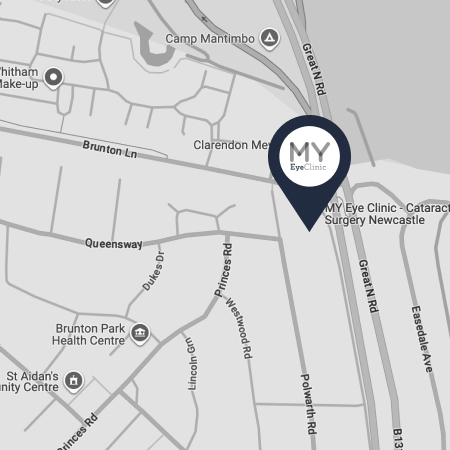
For people living in Newcastle, Gosforth and the wider North East, My Eye Clinic provides lens replacement treatment from its clinic on Great North Road in Brunton Park, Gosforth.
Having your assessment, treatment and follow-up care at a specialist eye clinic can make the process easier. The team can explain your lens options, discuss your vision goals and help you understand the costs and recovery before you make a decision.
Is lens replacement right for you?
Lens replacement can be an option for people who want to reduce their dependence on glasses or contact lenses, particularly when laser eye surgery may not be suitable.
The right treatment depends on your eyes, prescription, age, lifestyle and vision goals. A detailed assessment is needed before a surgeon can recommend treatment.
If you are considering lens replacement surgery, take the My Eye Clinic suitability self-test. It is a simple first step that can help you find out whether you may be suitable for vision correction.
Your best vision could still be ahead of you.
Find out if you are suitable for vision correction
Vision correction isn’t suitable for everyone.
The first step is to take the self test so you can find out whether you can benefit.