
What are the disadvantages of cataract surgery?
Cataract surgery is one of the most common and successful eye procedures performed today. It helps millions of people enjoy clearer vision every year. If you have cataracts, you may be considering treatment and wondering about the possible downsides.
A common question we hear at My Eye Clinic in Gosforth, England, is, “What are the disadvantages of cataract surgery?”
While cataract surgery is generally very safe and effective, no procedure is completely free from risks or limitations. Understanding both the benefits and the disadvantages can help you make an informed decision about your eye care.
In this guide, we will explain the potential disadvantages of cataract surgery in simple and easy-to-understand language.
What is cataract surgery?
Before looking at the disadvantages, it helps to understand what cataract surgery involves.
A cataract forms when the natural lens inside the eye becomes cloudy. This clouding can make vision blurry, dull, or difficult in bright light.
During cataract surgery, the cloudy lens is removed and replaced with a clear artificial lens. This artificial lens remains in the eye permanently and helps restore clearer vision.
For most people, the procedure is quick and performed as a day treatment.
Why do people choose cataract surgery?
Cataracts can affect daily life
As cataracts develop, they can make everyday activities more difficult.
Reading, driving, watching television, and recognising faces may become harder over time.
When cataracts start affecting quality of life, surgery may be recommended.
The benefits are often significant
Many people notice brighter colours, sharper vision, and reduced glare after surgery.
For this reason, cataract surgery remains one of the most successful procedures in modern medicine.
Cataract surgery is still a surgical procedure
Every surgery has risks
Although cataract surgery is considered very safe, it is still a form of surgery.
As with any medical procedure, there is a small risk of complications.
Most people recover without problems, but it is important to understand that no procedure can guarantee a perfect outcome.
Individual results vary
Every eye is different. Factors such as age, general health, and existing eye conditions can affect recovery and visual outcomes.
Your surgeon will assess your eyes carefully before recommending treatment.
Temporary side effects can occur
Blurry vision during recovery
Many people experience some blurry vision immediately after surgery.
This is usually temporary and improves as the eye heals.
Vision often becomes clearer over the following days and weeks.
Mild discomfort
It is normal for the eye to feel slightly scratchy, watery, or sensitive after surgery.
These symptoms usually improve quickly and are part of the normal healing process.
Some people still need glasses
Surgery does not always remove the need for glasses
One common misunderstanding is that cataract surgery guarantees freedom from glasses.
While some people become less dependent on glasses, others may still need them for reading, driving, or certain activities.
The outcome depends on the type of lens chosen and your individual vision needs.
Reading glasses may still be required
Many standard lens implants are designed to provide clear distance vision.
This means some people still need reading glasses after surgery.
Your surgeon can discuss lens options during your consultation.
Glare and halos can occur
Adjusting to the new lens
Some patients notice glare, halos, or rings around lights after surgery.
These symptoms are often more noticeable at night.
For many people, they become less noticeable as the brain adapts to the new lens.
Not everyone experiences these symptoms
The severity of glare and halos varies from person to person.
Many people experience little or no difficulty, while others may notice these effects more during the early recovery period.
Recovery takes time
Vision may not improve immediately
Although many patients notice improvements quickly, complete healing takes time.
The eye continues to recover for several weeks after surgery.
Patience is important during this period.
Follow-up care is necessary
Recovery involves using eye drops and attending follow-up appointments.
These visits allow your surgeon to monitor healing and ensure everything is progressing as expected.
Other eye conditions can affect results
Cataract surgery only treats cataracts
Removing a cataract can improve vision that has been affected by a cloudy lens.
However, it cannot cure other eye conditions.
Problems such as glaucoma, macular degeneration, or diabetic eye disease may still affect vision after surgery.
Expectations should be realistic
Your surgeon will explain what improvements you can reasonably expect based on your eye health.
A thorough assessment helps create realistic expectations before treatment.
Rare complications can occur
Serious problems are uncommon
Complications from cataract surgery are rare, but they can happen.
These may include infection, inflammation, swelling, or changes in eye pressure.
Fortunately, modern surgical techniques have made serious complications uncommon.
Careful monitoring helps
Regular follow-up appointments help identify and manage any issues quickly.
Prompt treatment can often resolve problems before they become more serious.
A second procedure may occasionally be needed
Posterior capsule opacification
Sometimes people notice cloudy vision months or years after cataract surgery.
This is often caused by a condition called posterior capsule opacification, sometimes referred to as a secondary cataract.
It is not the original cataract returning.
Treatment is usually simple
If this happens, a quick laser procedure can often restore clear vision.
The treatment is generally straightforward and does not involve another cataract operation.
Why many people still choose cataract surgery
The benefits often outweigh the disadvantages
Although there are disadvantages and risks to consider, many people find that the benefits of cataract surgery outweigh the potential drawbacks.
Clearer vision can improve independence, confidence, and quality of life.
Modern cataract surgery has an excellent track record
Advances in technology and surgical techniques have made cataract surgery safer and more effective than ever before.
Millions of people have successful outcomes every year.
How to decide if cataract surgery is right for you
A personal decision
The decision to have cataract surgery should be based on your symptoms, lifestyle, and visual needs.
What is right for one person may not be right for another.
Expert guidance matters
A comprehensive eye examination can help determine whether cataract surgery may benefit you.
At My Eye Clinic in Gosforth, England, we take time to explain your options and answer your questions so you can make an informed choice.
Take the next step
If cataracts are affecting your vision and daily life, it may be time to explore your treatment options.
Take our suitability self test today. It is quick and easy to complete and can help you understand whether you may be a suitable candidate for cataract treatment.
While cataract surgery has some disadvantages and risks, it remains one of the most effective ways to restore clearer vision. The key is understanding your options and choosing the treatment path that is right for you.
Find out if you are suitable for vision correction
Vision correction isn’t suitable for everyone.
The first step is to take the self test so you can find out whether you can benefit.
Our most popular procedures
What our patients say…
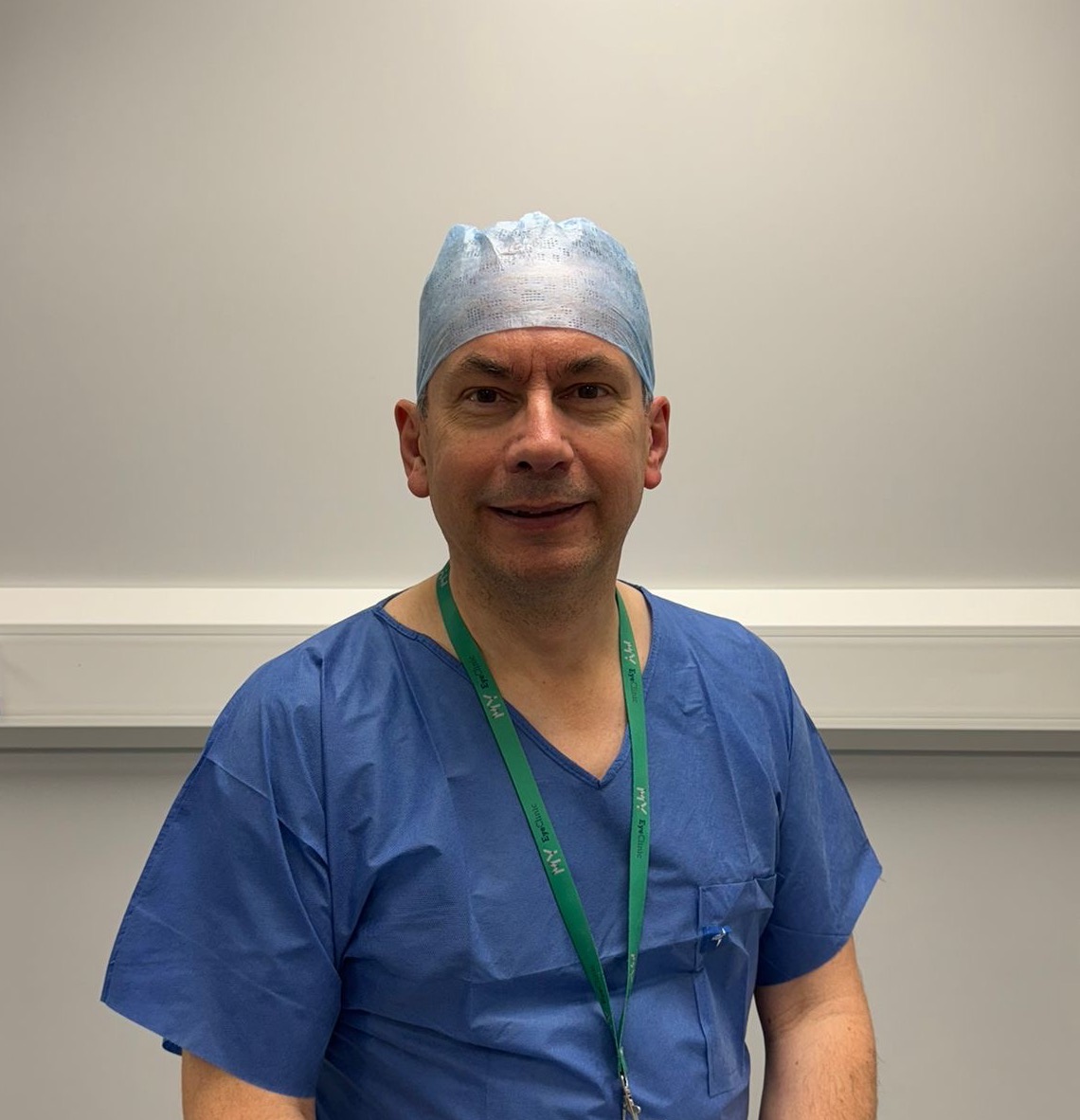
Hi, I’m Rob Boyce
After training as an engineer and research scientist, I pursued medicine at Nottingham University, followed by advanced ophthalmology training. With over 20 years as a Consultant Ophthalmologist specialising in Oculoplastic and Lacrimal Surgery, I’m committed to delivering the highest quality care at MY Eye Clinic, using cutting-edge techniques and patient-centred care.