Why can’t I get on bus after cataract surgery?
If you are preparing for cataract surgery, you may have heard that you should not travel home on a bus afterwards. This can seem confusing, especially if you normally use public transport every day.
The good news is that there is no rule that says you can never travel on a bus after cataract surgery. The advice is usually about the first few hours after your procedure, when your vision may still be blurry and you may not feel steady on your feet.
At My Eye Clinic in Gosforth, England, we want you to feel prepared for your treatment and recovery. In this guide, we explain why travelling by bus straight after cataract surgery is not usually recommended, when it may be safe to use public transport again, and how you can plan your journey home.
What happens after cataract surgery?
Your vision needs time to settle
Cataract surgery replaces your cloudy natural lens with a clear artificial lens. Although the procedure is usually quick, your eye needs time to begin healing.
Immediately after surgery, your vision may be blurred. Your pupil may still be enlarged from the eye drops used during treatment, and your eye may feel slightly watery or sensitive to light.
These temporary changes can make travelling alone more difficult.
You will usually go home the same day
Most patients return home a short time after their procedure.
Before you leave, your eye care team will check that you are feeling well and explain how to care for your eye during recovery.
You will also receive instructions about using your eye drops and attending your follow-up appointments.
Why is travelling on a bus not recommended straight after surgery?
Your vision may not be clear
After cataract surgery, your eyesight may not be sharp enough to travel safely on your own.
It can be difficult to judge steps, kerbs, or changes in ground level when your vision is still settling.
Waiting until your eyesight improves helps reduce the chance of trips or falls.
You may feel unsteady
Some patients feel tired after their procedure.
Others may notice mild dizziness while their eyes adjust.
Getting on and off a moving bus or standing during the journey may feel more difficult than usual.
Having someone with you can make travelling much easier.
Bright light can feel uncomfortable
Your eye may be more sensitive to sunlight after surgery.
If you need to go outside, wearing sunglasses can help make your journey more comfortable.
Many patients find that bright conditions improve over the following days as the eye heals.
Can someone travel with you?
It is usually the safest option
Most clinics recommend arranging for a friend or family member to take you home after cataract surgery.
Having someone with you means you have support if your vision is blurry or if you feel tired.
They can also help you remember the instructions given by your surgeon.
Plan your journey before surgery
It is a good idea to organise your transport before your appointment.
Knowing how you will get home can help you feel more relaxed on the day of your procedure.
When can you use a bus again?
Most people can return quite quickly
There is no fixed time that applies to everyone.
Many patients feel comfortable using public transport again within a day or two, once their vision has improved and they feel confident walking safely.
Always follow the advice given by your surgeon, as every recovery is different.
Think about your confidence
Before travelling alone, ask yourself whether you feel comfortable walking, judging distances, and getting on and off a bus safely.
If your vision is still blurry or your eye feels uncomfortable, it may be sensible to wait a little longer.
Can you drive instead?
Not straight after surgery
You should not drive yourself home after cataract surgery.
Your vision needs time to recover, and it may not meet the legal standard for driving immediately after your procedure.
Driving too soon could put both you and other road users at risk.
Your surgeon will advise you
Many patients are able to return to driving once their vision has recovered and they meet the legal eyesight requirements.
Your surgeon will let you know when it is safe to do so.
If you are unsure, ask your eye care team before getting behind the wheel.
What else should you avoid after cataract surgery?
Give your eye time to heal
During the first few weeks, your surgeon may advise you to avoid heavy lifting, swimming, rubbing your eye, or taking part in activities that could expose your eye to dirt or injury.
These precautions help your eye recover safely.
Use your eye drops correctly
Your prescribed eye drops help reduce inflammation and lower the risk of infection.
Using them exactly as instructed is one of the most important parts of your recovery.
Even if your eye feels comfortable, continue using them for the full course recommended by your surgeon.
What should you expect during recovery?
Vision often improves quickly
Many patients notice brighter colours and clearer vision within a few days of surgery.
However, every eye heals at its own pace.
It is normal for your vision to continue improving over the following weeks.
Mild symptoms are common
Some watering, mild discomfort, or sensitivity to light is common after cataract surgery.
These symptoms usually improve as your eye heals.
If you experience severe pain, a sudden loss of vision, increasing redness, or a large number of new floaters, contact your eye clinic immediately.
How can you prepare before surgery?
Make a recovery plan
Preparing before your surgery can make your recovery much easier.
Arrange someone to collect you, have your prescribed eye drops ready at home, and make sure you have sunglasses available for your journey outside.
Planning ahead allows you to focus on resting when you return home.
Ask questions before your procedure
If you are unsure about travelling after surgery, ask your eye care team before the day of your operation.
They will be happy to explain what to expect and provide advice based on your individual circumstances.
Why choose My Eye Clinic?
Personalised care at every stage
At My Eye Clinic in Gosforth, we know that every patient is different.
We take the time to explain your treatment, answer your questions, and provide clear guidance before and after surgery so you feel confident throughout your journey.
Supporting your recovery
Our experienced team is committed to helping you achieve the best possible outcome.
From your first consultation to your follow-up appointments, we are here to support you every step of the way.
Take the next step
If you are considering cataract surgery and would like to find out whether you may be a suitable candidate, take our suitability self test today.
It only takes a few minutes to complete. If your results suggest you may be suitable, our experienced team will be happy to discuss your options and answer any questions you may have.
Your best vision could still be ahead of you.
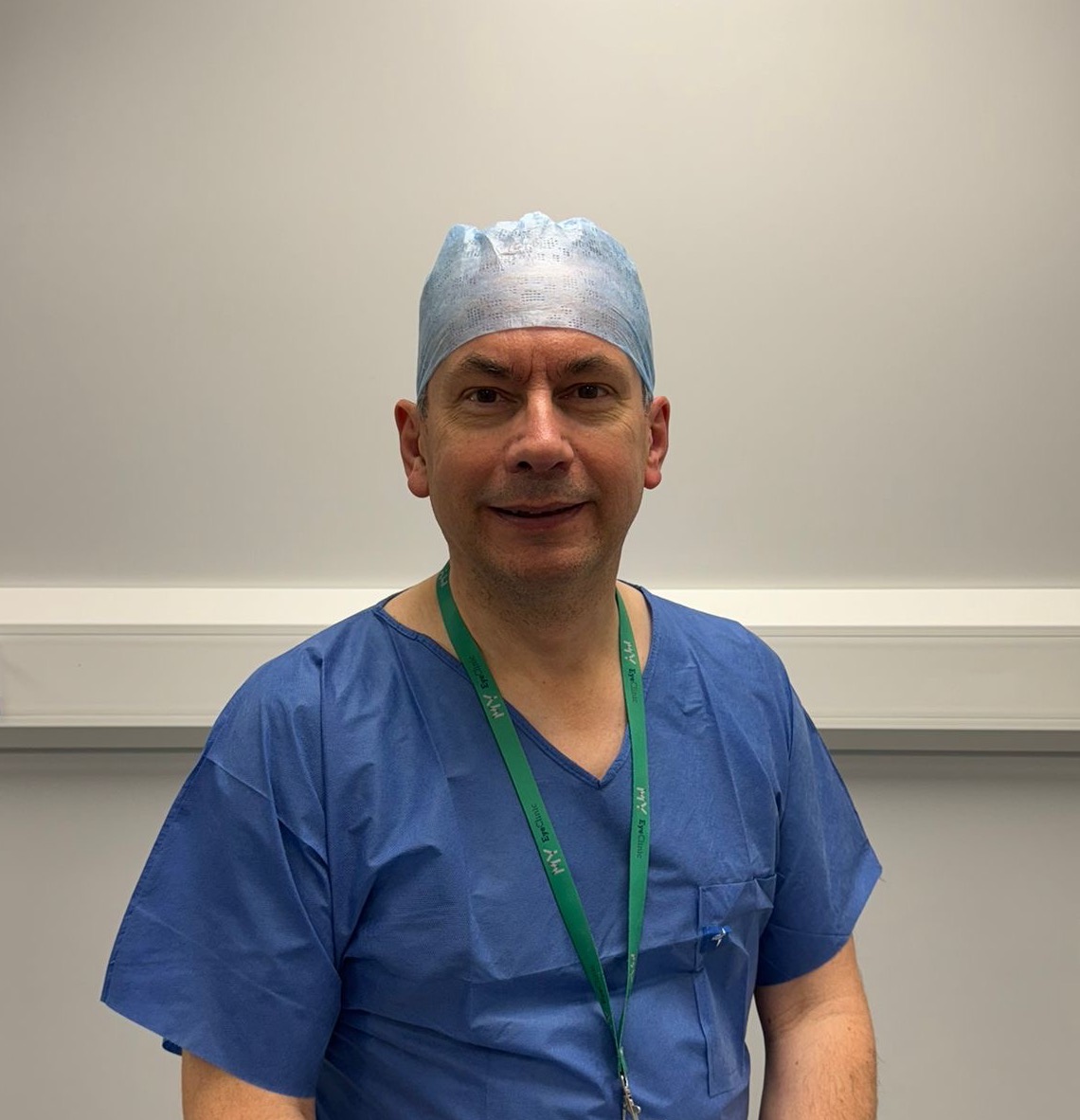
Hi, I’m Rob Boyce
After training as an engineer and research scientist, I pursued medicine at Nottingham University, followed by advanced ophthalmology training. With over 20 years as a Consultant Ophthalmologist specialising in Oculoplastic and Lacrimal Surgery, I’m committed to delivering the highest quality care at MY Eye Clinic, using cutting-edge techniques and patient-centred care.
Find out if you are suitable for vision correction
Vision correction isn’t suitable for everyone.
The first step is to take the self test so you can find out whether you can benefit.