
Spotting the symptoms of cataracts
Cataracts are a common eye problem that can develop as we get older. They can cause changes to your vision and may make everyday tasks harder.
A cataract forms when the natural lens inside your eye becomes cloudy. This lens sits behind the coloured part of your eye, called the iris. A clear lens helps light reach the back of the eye so you can see clearly.
As a cataract develops, the lens becomes less clear. This can cause your vision to become cloudy or blurred. Cataracts usually develop slowly, so you may not notice a change at first.
Knowing the symptoms of cataracts can help you understand when it may be time to have your eyes checked.
What are the symptoms of cataracts?
Cataracts can affect people in different ways. You may notice one symptom or several changes to your vision.
Cloudy or blurred vision
One of the most common signs of a cataract is cloudy or blurred vision.
You may feel as though you are looking through a dirty window. Things may not look as sharp as they used to, even when you are wearing your glasses or contact lenses.
You may find it harder to read a book, newspaper or phone. You may also notice that signs in the distance are not as clear as they once were.
Blurred vision can have many causes, so it does not always mean you have a cataract. An eye examination can help find the cause of any changes to your sight.
Glare and sensitivity to bright light
Cataracts can make bright light harder to manage. You may notice more glare when you are outside on a sunny day.
Lights may also appear brighter or more uncomfortable than before. Some people notice glare from car headlights when driving at night.
You may also see rings or halos around lights. These changes can make activities such as driving more difficult, especially when it is dark.
Double vision in one eye
Some people with cataracts notice double or multiple images from one eye.
This can make objects look less clear or appear to have a shadow around them. Double vision can have many possible causes, so it is important to have your eyes checked if this happens.
Poor night vision
Cataracts can make it harder to see when there is less light.
You may notice that walking outside after dark is more difficult. Reading in low light may also become harder.
Night driving can become more challenging if headlights cause more glare or if you cannot see as clearly in darker areas.
Do cataracts always cause symptoms?
Not always. Cataracts can develop slowly, and you may not notice any major changes at first.
In the early stages, a cataract may have little effect on your daily life. Over time, however, the clouding can become more noticeable.
You may first notice small changes, such as needing brighter light to read or finding that colours do not look as bright as they used to.
As the cataract develops, these changes may start to affect everyday activities.
What causes cataracts?
Getting older
Age is the most common reason cataracts develop. Changes to the natural lens are a normal part of ageing.
Cataracts can also develop for other reasons. Certain health conditions, previous eye injuries, some medicines and past eye surgery may increase the risk.
Your eye specialist can assess your eyes and explain whether a cataract is causing your symptoms.
I have cataract symptoms. What should I do?
If you have noticed changes to your vision, it is a good idea to have your eyes checked.
Having cataract symptoms does not always mean that you have a cataract. Blurred vision, glare and problems with night vision can have other causes.
An eye examination can check the health of your eyes and look for signs of cataracts or other eye problems.
At My Eye Clinic in Gosforth, Newcastle, our ophthalmic surgeons can assess your eyes and talk to you about your treatment options if a cataract is found.
How are cataracts treated?
Cataract surgery
A cataract cannot be cleared with glasses or eye drops. When a cataract starts to affect your daily life, cataract surgery may be recommended.
During cataract surgery, the cloudy natural lens is removed and replaced with a clear artificial lens called an intraocular lens, or IOL.
The new lens is designed to stay in your eye for life.
Cataract surgery is usually performed with local anaesthetic. Anaesthetic eye drops and, in some cases, an injection are used to numb the eye. You remain awake during the procedure.
Your surgeon will explain what will happen before your treatment and answer any questions you may have.
Choosing the right lens
The type of lens used during cataract surgery depends on your eyes, prescription and visual needs.
A standard lens can help improve vision at a chosen distance. Other lens options may help correct problems such as short-sightedness, long-sightedness or astigmatism.
This is sometimes called refractive cataract surgery. Your surgeon can explain which lens options may be suitable for you.
What happens after cataract surgery?
Your vision may be blurry at first after cataract surgery, but it should improve as your eye heals.
You will usually need to use eye drops after surgery. Your surgeon will also arrange follow-up care and tell you when you can return to normal activities.
Recovery is different for everyone. Your surgeon will give you advice based on your eyes and the type of treatment you have had.
If you are considering private cataract surgery in Newcastle, you can also learn more about private cataract surgery costs.
Why choose My Eye Clinic in Newcastle?
Specialist eye care
At My Eye Clinic in Gosforth, Newcastle, we provide specialist eye care for cataracts and other eye conditions.
Our ophthalmologists hold consultant NHS posts and have additional training in areas of ophthalmology such as cataract surgery, cornea, glaucoma, retinal problems and neuro-ophthalmology.
Every patient has different needs. Your consultation allows your surgeon to examine your eyes, discuss your symptoms and explain the treatment options that may be suitable for you.
Could your symptoms be linked to cataracts?
Changes to your vision should not be ignored. If you have noticed cloudy vision, glare, double vision or problems seeing at night, an eye examination can help find the cause.
If you are considering treatment at My Eye Clinic, take our free suitability self-test. It only takes a few minutes and can help you find out whether you may be suitable for vision correction treatment.
Your best vision could still be ahead of you.
Find out if you are suitable for vision correction
Vision correction isn’t suitable for everyone.
The first step is to take the self test so you can find out whether you can benefit.
Our most popular procedures
What our patients say…
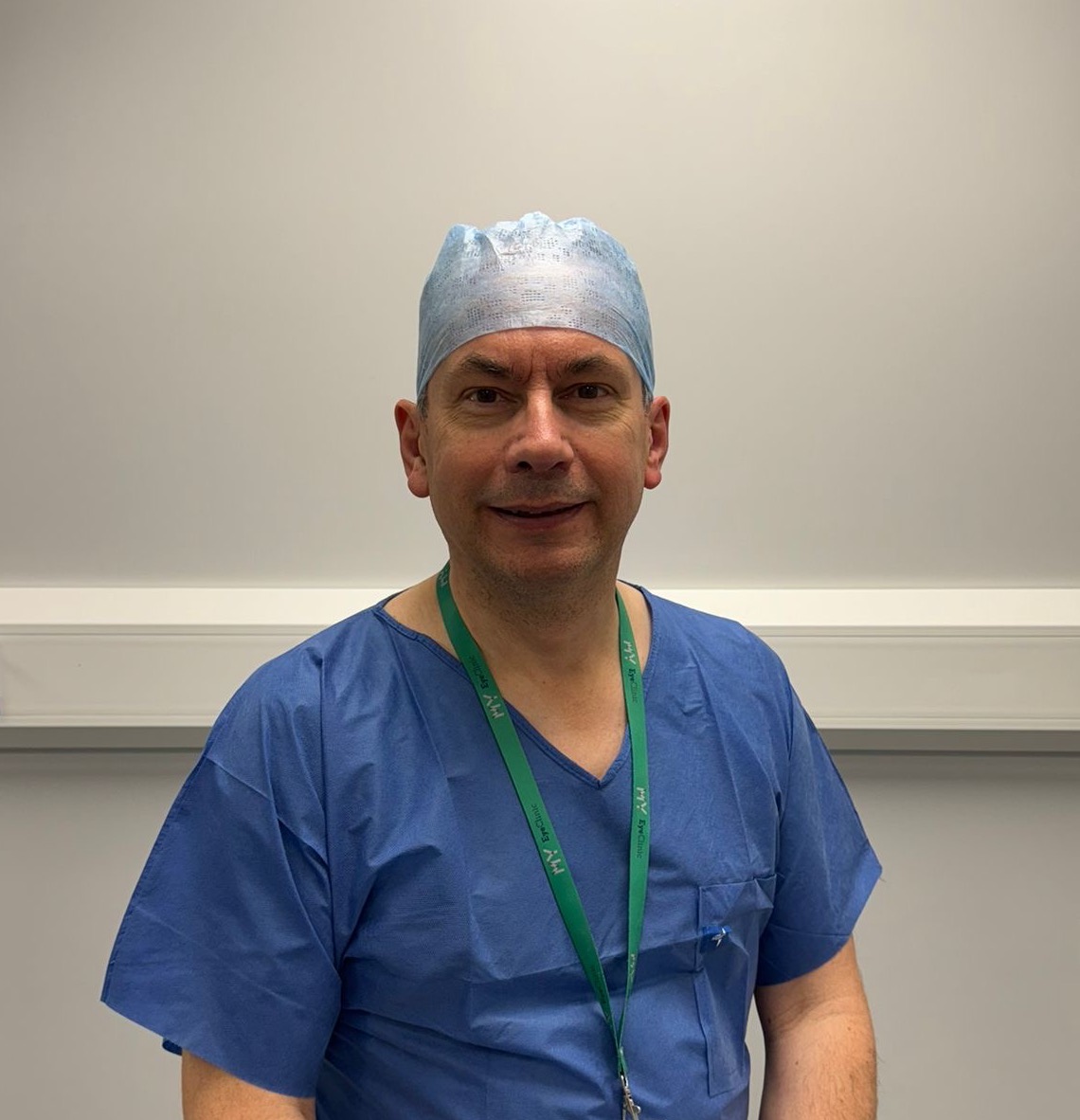
Hi, I’m Rob Boyce
After training as an engineer and research scientist, I pursued medicine at Nottingham University, followed by advanced ophthalmology training. With over 20 years as a Consultant Ophthalmologist specialising in Oculoplastic and Lacrimal Surgery, I’m committed to delivering the highest quality care at MY Eye Clinic, using cutting-edge techniques and patient-centred care.