
How does laser eye surgery work?
Laser eye surgery changes the shape of the cornea to help your eye focus light more clearly. It can correct common vision problems such as short-sightedness, long-sightedness and astigmatism, which may reduce your need for glasses or contact lenses.
There are different types of laser eye surgery, including LASIK, LASEK and TransPRK. Each treatment works in a slightly different way, but they all have the same main goal: to reshape the cornea and improve how light enters the eye.
At My Eye Clinic in Gosforth, Newcastle, we assess your eyes carefully before recommending the treatment that is most suitable for you.
How does laser eye surgery correct your vision?
The cornea is the clear front part of your eye. It helps bend light so that it can focus on the retina at the back of your eye.
If the shape of your cornea means that light does not focus correctly, your vision can look blurry. This can happen with short-sightedness, long-sightedness or astigmatism.
During laser eye surgery, a laser carefully removes tiny amounts of tissue from the cornea. This changes its shape so that light can focus more accurately on the retina.
The laser is computer-controlled and uses measurements taken during your eye assessment to help plan your treatment.
What happens during laser eye surgery?
LASIK - (Laser-Assisted In Situ Keratomileusis)
During LASIK, a thin flap is created in the cornea. The flap is gently lifted so the laser can reshape the tissue underneath.
Once the treatment is complete, the flap is placed back into position. It normally heals naturally without stitches.
LASIK usually has a short recovery time, and many people notice a clear improvement in their vision within the first day.
LASEK - (Laser-Assisted Sub-Epithelial Keratectomy)
LASEK is a surface treatment. Instead of creating a flap, the thin surface layer of the cornea is moved aside.
The laser then reshapes the cornea underneath. The surface layer is put back and a bandage contact lens may be placed over the eye while it heals.
Recovery takes longer than LASIK, but LASEK may be suitable for some people with thinner or flatter corneas.
TransPRK - (Transepithelial Photorefractive Keratectomy)
TransPRK is another surface treatment. The laser removes the surface layer of the cornea and reshapes the cornea as part of the same treatment.
There is no corneal flap, and no surgical instrument is used to remove the surface layer.
TransPRK may be an option for some people with thinner corneas or those who take part in activities where an eye injury could be a concern like people who play contact sports or have jobs with physical risk (such as first responders or military roles).
Which is better LASIK, LASEK or TransPRK?
There is no single treatment that is best for everyone.
LASIK generally has the quickest recovery. LASEK and TransPRK take longer to heal because the surface of the cornea needs time to recover.
The best option depends on factors such as your prescription, corneal shape, eye health and lifestyle.
Your surgeon will explain the differences and recommend the treatment that is suitable for your eyes.
What happens before laser eye surgery?
Before treatment, you will have a detailed eye assessment. Your prescription will be checked and your cornea will be measured and mapped.
Your clinician will also look at your general eye health and may check your eye pressure and tear film. Your lifestyle, work and vision goals will also be discussed.
These checks help your surgeon decide whether laser eye surgery is suitable for you and which treatment may be the best option.
Not everyone is suitable for laser eye surgery. If it is not right for you, your clinician will explain why and discuss whether there are other options.
Is laser eye surgery painful?
Numbing eye drops are used before treatment, so you should not feel the laser working on your cornea.
You may feel some pressure or mild discomfort during the procedure. After treatment, your eyes may feel gritty, watery or sensitive, particularly after LASEK or TransPRK.
Your clinical team will explain what to expect and how to keep your eyes comfortable during recovery.
What is recovery like?
The first few days
Your recovery will depend on the type of laser eye surgery you have.
After LASIK, vision often improves quickly. Many people can return to normal activities within a few days, although your eyes may still feel dry or sensitive for a while.
LASEK and TransPRK usually take longer to recover. Your vision may be blurry at first and improve over the following days and weeks.
It is normal for vision to change during the healing process. Your eyes may also feel dry, watery or sensitive to light.
The weeks after treatment
Your eyes can continue to settle for several weeks after laser eye surgery. You may need to use prescribed eye drops during this time.
Follow-up appointments allow your clinical team to check your healing and answer any questions.
It is important to follow your aftercare instructions and avoid activities your clinic advises you to avoid while your eyes recover.
Laser eye surgery FAQs
How long does laser eye surgery take?
The procedure itself is usually very quick, often taking only a few minutes per eye. You should expect to spend longer at the clinic because of the preparation and checks before and after treatment.
When will I be able to see clearly?
This depends on the treatment you have. LASIK often provides a quick improvement in vision, while LASEK and TransPRK usually need more time as the surface of the cornea heals.
Will I still need glasses after laser eye surgery?
The aim of laser eye surgery is to reduce your dependence on glasses or contact lenses. However, results vary and some people may still need glasses for certain tasks.
Your eyes can also change naturally as you get older, so you may need reading glasses later in life.
Is laser eye surgery suitable for everyone?
No. Your prescription, age, eye health, corneal measurements and other factors all need to be considered.
A detailed assessment is the best way to find out whether laser eye surgery may be suitable for you.
Could laser eye surgery be right for you?
Laser eye surgery may sound complex, but the basic idea is simple: the cornea is carefully reshaped so your eye can focus light more accurately.
The type of treatment you need depends on your eyes and your individual needs. At My Eye Clinic in Gosforth, Newcastle, we can assess your eyes and talk you through your options.
Take our quick suitability self-test to find out if you may be suitable for laser eye surgery.
Your best vision could still be ahead of you.
Find out if you are suitable for vision correction
Vision correction isn’t suitable for everyone.
The first step is to take the self test so you can find out whether you can benefit.
Our most popular procedures
What our patients say…
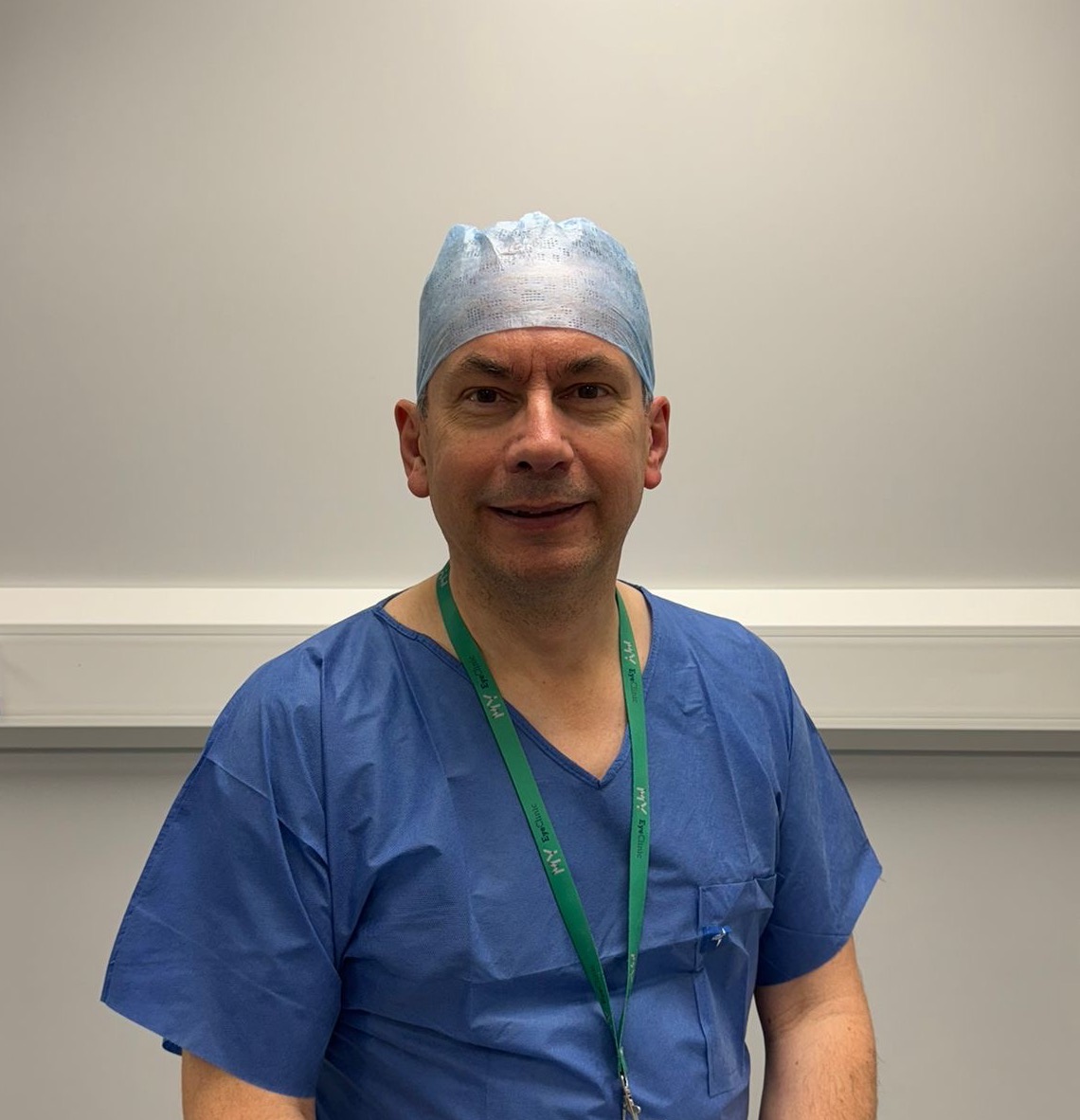
Hi, I’m Rob Boyce
After training as an engineer and research scientist, I pursued medicine at Nottingham University, followed by advanced ophthalmology training. With over 20 years as a Consultant Ophthalmologist specialising in Oculoplastic and Lacrimal Surgery, I’m committed to delivering the highest quality care at MY Eye Clinic, using cutting-edge techniques and patient-centred care.